AB 495 Explained: How California’s Family Preparedness Bill Became a Parental-Rights Flashpoint

AB 495 Explained: How California’s Family Preparedness Bill Became a Parental-Rights Flashpoint

By the GovBuddy team · Last reviewed May 22, 2026

Quick Answer

AB 495, the Family Preparedness Plan Act of 2025, was signed by Governor Gavin Newsom on October 12, 2025 and chaptered as Chapter 664. Authored by Assemblymember Celeste Rodriguez, it updates California’s caregiver authorization affidavit rules, expands joint guardianship for temporary parental unavailability, adds school information requirements, and extends immigration-enforcement protections to licensed childcare facilities and state preschool programs. Most provisions took effect January 1, 2026, with Attorney General model policies due April 1, 2026 and preschool adoption required by July 1, 2026. The law passed after a months-long public fight in which the legal mechanism and the public narrative became two different fights.


Table of contents

  1. The fear that started the bill
  2. Why existing law was not enough
  3. The phrase that changed the debate
  4. How opposition reframed the bill
  5. How supporters defended it
  6. The final debate: text versus misinformation
  7. What AB 495 actually does now
  8. How AB 495 passed
  9. What AB 495 teaches about bill tracking

The fear that started the bill

A parent is detained. A child is at school or daycare. Nobody knows who has legal authority to pick the child up, keep them enrolled, or authorize medical care. That scenario, repeated in nearly every committee hearing, is where AB 495 began.

Assemblymember Celeste Rodriguez introduced the bill on February 10, 2025. In her opening committee testimony she cited California’s 10.6 million immigrants and at least 1 million children with one immigrant parent, and connected those numbers to the trauma of sudden family separation. In Assembly Human Services she described families fearing ICE “showing up and tearing their families apart,” referenced her own father’s childhood experience of seeing his caregiver detained, and pointed to a recent case of a father detained in front of his children on the way to school.

The bill’s emotional center was not abstract immigration policy. It was the school pickup problem.

Why existing law was not enough

The sponsors gave the bill its legal argument in Assembly Judiciary. Their case was not that California had no tools. It was that the existing tools failed in two opposite ways.

Sharon Cartagena of Public Counsel testified that her organization’s guardianship team assists more than 80% of litigants navigating probate guardianship in Los Angeles County. She described a mother detained by ICE who had arranged for a family friend to care for her child. When the mother returned four months later, the friend refused to return the child, and the court would not quickly dissolve the temporary guardianship. Cartagena argued that California lacked nuanced temporary-care tools, that traditional guardianship could suspend a parent’s rights even when there were no concerns about fitness, and that AB 495 would create a middle ground letting a parent share custody with a non-parent while staying involved.

Kristin Power of the Alliance for Children’s Rights gave the opposite half of the problem. Caregivers who had completed a caregiver authorization affidavit, she testified, still faced resistance from schools and medical providers who did not consistently honor the document. She described a caregiver seeking medical care for her nephew, Gabriel, whose provider refused the affidavit and demanded parental authorization or proof of guardianship. The care was delayed until attorneys intervened.

That was the policy problem the bill was trying to solve. Informal affidavits could be ignored by institutions. Formal guardianships could be too heavy and too hard to unwind. AB 495’s authors argued California needed something in between.

The phrase that changed the debate

The earliest committee versions of AB 495 included language allowing the caregiver authorization affidavit to be used by “nonrelative extended family members,” a category that explicitly included close family friends and godparents. That phrase became the bill’s attack surface.

By the time the Assembly concurred in the Senate amendments, the bill had changed. The final concurrence analysis states that Senate amendments removed the caregiver-affidavit changes related to nonrelative family members and clarified daycare, childcare, and joint guardianship provisions.

If you only read the first version, you miss the compromise. If you only read the final version, you miss why the fight exploded.

This is the gap that defines AB 495 as a case study. The language that powered the opposition campaign was not the language that survived intact into law. But the campaign continued past the amendment, because most of the public was responding to a version of the bill that no longer existed.

How opposition reframed the bill

The Senate Appropriations hearing was the turning point in public visibility. The author waived presentation, and the hearing moved straight into public testimony. There were no support witnesses at first. The fiscal hearing became an opposition platform.

Greg Burt of the California Family Council argued that the caregiver authorization affidavit was designed to operate without parental consent because it required neither a parent signature nor a court seal. He argued the bill would let an unrelated adult claiming a mentoring relationship pick up a child from school and make medical decisions, and warned of constitutional and litigation risks. By the Senate floor, Senator Kelly Seyarto argued that existing law already gave parents the tools to designate caregivers, and that AB 495 imposed costly mandates on schools, childcare providers, and courts without adding parent signature, court seal, or notarization. Senator Suzette Martinez Valladares, drawing on her experience as a parent and former childcare provider, argued that childcare providers must know exactly who they are releasing children to, and that a penalty for perjury imposed after the fact does not protect a child in the moment.

These were not abstract arguments. The opposition’s strongest framing was a question about speed versus safeguards: supporters wanted families to be able to act quickly when a parent disappeared; critics argued that fast paperwork could create real-time child-safety and institutional liability risk.

That framing was harder to dismiss than the inaccurate claims that traveled alongside it, and it shaped every floor debate that followed.

How supporters defended it

By the Senate floor, the bill’s defenders had stopped explaining what AB 495 did and started defending what it did not do.

Senator Susan Rubio compared the affidavit process to a parent choosing someone trusted in advance, similar to how individuals use powers of attorney when they cannot act for themselves. The process, she argued, was authorized and legal, not strangers picking up children. Senator Scott Wiener pointed out that California’s caregiver framework dated back to the 1990s and argued that when parents and children are separated through incarceration, deportation, or another reason, parents should be able to plan in advance so children are not routed into foster care as a first response.

On the Assembly concurrence floor, Assemblymember Sade Elhawary made the case in human terms. Every parent’s worst fear, she said, is being separated from a child, whether through illness, incarceration, military deployment, or immigration detention. AB 495, she argued, keeps children with trusted loved ones rather than strangers or the system. She emphasized that the caregiver still has to provide identifying information and sign under penalty of perjury, and that the bill applies when the child is already living with the caregiver.

The supporters’ core move was a reframe: AB 495 was not about replacing parents. It was about giving parents a legally recognized way to choose who steps in before the state has to.

The final debate: text versus misinformation

By the Assembly concurrence vote on September 11, 2025, the floor debate was no longer only about bill mechanics. It had become a debate about the public campaign around the bill itself.

Rodriguez told the chamber that opponents had harassed her staff, made racist statements, and threatened her life and her children’s lives. She asked opponents to read the bill instead of spreading misinformation, then asked colleagues to create family preparedness plans of their own. Assemblymember Patrick Ahrens said there was significant misinformation about the bill and argued that the attacks had escalated into threats of violence. Assemblymember Carl DeMaio, opposing the bill, argued that the original version of AB 495 deserved criticism because it had allowed a nonrelative extended family member to claim a mentoring relationship with a minor. When Rodriguez asked whether members could misrepresent a bill during debate, the Speaker responded that members are encouraged to refute information they believe is inaccurate.

AB 495 passed, but the opposition changed the story. By the end, supporters were not only explaining what the bill did; they were defending what it did not do.

What AB 495 actually does now

The final law, signed October 12, 2025 and chaptered as Chapter 664, does the following:

  • Updates the caregiver authorization affidavit. The statutory form is revised. The Senate amendments removed the earlier expansion to nonrelative family members.
  • Revises the definition of “relative” for caregiver purposes and clarifies school-related medical care that a caregiver may consent to.
  • Requires schools to share family-safety information. Local educational agencies must give families information aligned with California Attorney General guidance, including family safety plans, caregiver authorization affidavits, and the importance of keeping emergency contacts current.
  • Extends immigration-enforcement protections to licensed child daycare facilities and license-exempt California state preschool programs. These facilities generally may not collect immigration-status information from children or families unless required by law or needed to administer a supported program.
  • Requires reporting of immigration-enforcement-related requests for information or facility access to the State Department of Social Services and the Attorney General, or in some preschool cases to the State Department of Education and Attorney General.
  • Requires Attorney General model policies by April 1, 2026 limiting assistance with immigration enforcement at those facilities. State preschool programs must adopt those policies, or equivalent policies, by July 1, 2026.
  • Expands joint guardianship for temporary parental unavailability. A court may, at its discretion, appoint a custodial parent and a person the parent nominates as joint guardians when the parent will be temporarily unavailable because of a serious medical condition, disability, military service, incarceration, or immigration-related administrative action.
  • Makes joint guardianship records confidential and prohibits disclosure to immigration enforcement without a court order based on compelling necessity unrelated to immigration enforcement.

The court is still the gatekeeper. AB 495 does not allow anyone to become a legal guardian without a court order.

How AB 495 passed

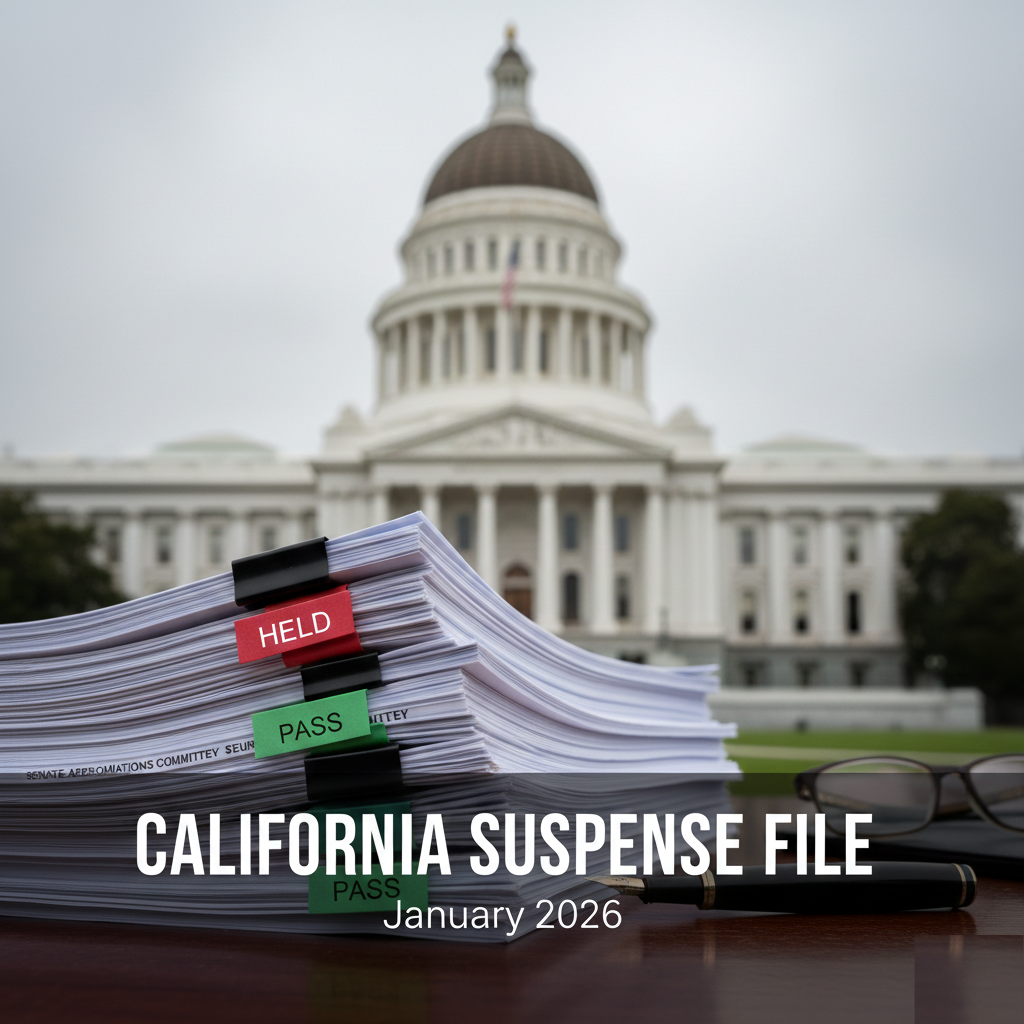
The bill cleared every committee and both floors before reaching the Governor. The vote that locked in the final language was the Assembly concurrence vote on September 11, 2025, after the Senate amendments narrowed the bill. Along the way, AB 495 was placed on the Senate Appropriations suspense file on August 18, 2025 before being voted out “do pass as amended” on August 29. That was the procedural step where the bill’s final shape was actually decided.

Stage Vote
Assembly Floor (June 3, 2025) 62–7
Senate Appropriations, “do pass as amended” (August 29, 2025) 5–2
Senate Floor (September 10, 2025) 29–10
Assembly concurrence in Senate amendments (September 11, 2025) 60–20

The 60–20 concurrence vote was the final lock-in. The 5–2 Senate Appropriations vote on August 29 was the moment that made the final language possible. For the procedural context on how California’s mid-session deadlines work, see our companion piece on why May 29 is a major California bill deadline.

What AB 495 teaches about bill tracking

AB 495 is a case study in why following a bill’s title is not enough. The real story lived in committee testimony, amendment language, opposition mobilization, floor debate, fiscal analysis, and the final concurrence analysis written by the committee staff who shape state policy in California, New York, and Ohio. By the time most people searched “AB 495,” the bill’s language had already changed and the political fight had already hardened around an earlier version.

The lesson is not partisan. It is operational. Whichever side of this bill you were on, the version that became law was different from the version that became famous, and the difference was visible in the amendment trail months before the Governor’s signing statement.


Track bills before they become headlines

AB 495 did not become controversial overnight. The warning signs were visible in committee testimony, amendment language, opposition letters, fiscal analysis, floor debate, and concurrence votes. GovBuddy Engage helps legislative teams see those signals early, before the public narrative hardens and before the language is locked.

See GovBuddy Engage →


Frequently asked questions

What is AB 495?

AB 495 is the Family Preparedness Plan Act of 2025, a California statute that updates caregiver authorization affidavit rules, expands joint guardianship for temporary parental unavailability, adds school information requirements, and extends immigration-enforcement protections to licensed childcare facilities and state preschool programs. It was authored by Assemblymember Celeste Rodriguez.

Is AB 495 law?

Yes. Governor Gavin Newsom signed AB 495 on October 12, 2025 and it was chaptered the same day as Chapter 664, Statutes of 2025. Most provisions took effect January 1, 2026.

Why was AB 495 controversial?

Early versions of the bill expanded the caregiver authorization affidavit to “nonrelative extended family members.” Critics argued the expanded language created caregiver authority without sufficient verification, raising parental-rights and child-safety concerns. Supporters argued the bill preserved parental choice and prevented children from being routed into foster care after sudden separation. Senate amendments removed the caregiver-affidavit changes related to nonrelative family members before the bill became law.

Did AB 495 allow nonrelatives to become caregivers?

The earlier versions contained language that opponents argued could enable that. The final concurrence analysis confirms that Senate amendments removed the caregiver-affidavit changes related to nonrelative family members. The chaptered law does not contain that expansion.

What changed in the Senate amendments?

The Senate amendments removed caregiver-affidavit changes related to nonrelative family members and clarified daycare, childcare, and joint guardianship provisions. The Assembly concurred in those Senate amendments on September 11, 2025, locking in the version Governor Newsom signed.

Does AB 495 remove parental rights?

The Governor’s signing statement said AB 495 does not change legal custody or guardianship without a court decision and does not make someone a child’s caregiver, legal custodian, guardian, or parent without a court order. Critics argued the bill’s practical effect could weaken parental authority; supporters argued it preserved parental choice while giving families more planning tools.

Does AB 495 require a court order for guardianship?

Yes. The joint guardianship provision in AB 495 requires a court, exercising its discretion, to appoint the custodial parent and a nominated person as joint guardians. The court remains the gatekeeper. AB 495 does not allow guardianship to be established without a court order.

What does AB 495 mean for schools and childcare providers?

Local educational agencies must provide families with information aligned with California Attorney General guidance, including family safety plans, caregiver authorization affidavits, and emergency contact updates. Licensed child daycare facilities and state preschool programs generally may not collect immigration-status information from children or families unless required by law, and certain immigration-enforcement-related requests must be reported to state agencies.

When do AB 495 implementation deadlines apply?

Most of the law took effect January 1, 2026. The Attorney General must publish model policies for childcare facilities and state preschool programs by April 1, 2026. California state preschool programs must adopt those policies, or equivalent policies, by July 1, 2026.

What does AB 495 teach about California bill tracking?

AB 495 shows that following a bill’s title is not enough to understand what it does or why it matters. The version that became law was substantively different from the version that became publicly controversial. The amendment trail, committee testimony, and concurrence analysis told a more accurate story than the headlines did, and they were available months earlier.


Sources

  • AB 495, California Legislative Information, bill text, history, and votes
  • Chapter 664, Statutes of 2025, chaptered version
  • Assembly Concurrence in Senate Amendments, AB 495 analysis, September 11, 2025
  • Senate Floor Analysis, AB 495, sponsors and sources
  • Governor’s signing statement, Office of Governor Gavin Newsom, October 12, 2025
  • San Francisco Chronicle reporting on AB 495 and the historical context of California’s caregiver authorization affidavit
  • ABC7 / KGO reporting on Capitol opposition rallies, August 2025
  • KCRA reporting on post-signing reaction and opposition organizing

New Bills Compliance Deadlines: California Government 2026

By the GovBuddy team · Last reviewed May 22, 2026

Quick Answer

California enacted a wave of new bills in 2025 that became compliance obligations on January 1, 2026, each carrying its own deadline. The notice deadlines under SB 294 (the Workplace Know Your Rights Act) have already passed: February 1 for the employee notice, March 30 for the emergency contact election. The next fixed compliance date is July 1, 2026, when the Labor Commissioner must publish SB 294 training videos. Separately, the Legislature is still in session: the May 29, 2026 house of origin deadline is the first major filter on which new bills advance toward becoming the compliance obligations of 2027. This page covers both: the new-bill deadlines already in force, and the legislative calendar that produces the next round.


Table of contents

  1. Quick reference: California compliance deadlines for 2026
  2. What does “new bills compliance deadlines” mean in California government?
  3. SB 294: the two deadlines that already passed (and why they still matter)
  4. How many years can an employee sue for pay discrimination?
  5. What changed in California WARN Act notices?
  6. More 2025 laws now in effect for 2026 across sectors
  7. The legislative calendar: how May 29 decides which new bills survive
  8. Your mid-year compliance checklist

Quick reference: California compliance deadlines for 2026

Date Obligation Why it matters
Jan 1, 2026 SB 294, SB 642, SB 617 take effect The new compliance baseline for California employers
Feb 1, 2026 SB 294 Know Your Rights notice due (passed) Up to $500 per employee for notice violations
Mar 30, 2026 SB 294 emergency contact election due (passed) Up to $500/day per employee, capped at $10,000
May 29, 2026 House of origin deadline for 2026 bills Decides which new bills survive in the Legislature
Jul 1, 2026 Labor Commissioner publishes SB 294 training videos Use them to document good-faith compliance
Aug 31, 2026 Last day for each house to pass bills The session’s final passage deadline
Ongoing SB 294 notice for every new hire; annual redistribution Permanent change to onboarding

Sources: California Labor Code §§ 1550–1559 (SB 294); Labor Commissioner SB 294 notice and template; law-firm compliance analyses cited throughout.


What does “new bills compliance deadlines” mean in California government?

Every year the California Legislature passes new bills that become law, and many of them create an affirmative obligation an organization has to meet by a fixed date: a notice to distribute, a form to update, a policy to revise, or a penalty to avoid. Those fixed dates are the compliance deadlines. The phrase “new bills compliance deadlines” is really two questions stacked together: what did the state just require, and by when do we have to comply.

For 2026, the answers cluster in employment law, because that is where the Legislature set the hardest deadlines and the steepest per-employee penalties. Three bills enacted in the 2025 session set the 2026 baseline, all effective January 1, 2026:

  • SB 294: the Workplace Know Your Rights Act. New notice, emergency contact, and anti-retaliation obligations.
  • SB 642: the Pay Equity Enforcement Act. Expanded pay transparency and a longer statute of limitations for pay discrimination claims.
  • SB 617: expanded Cal-WARN Act notice content for mass layoffs, relocations, and terminations.

Those are the new bills already carrying deadlines. But the Legislature has not stopped. The 2026 session is still running, producing the next set of bills, and the May 29 house of origin deadline is the filter on which of them advance. Tracking both halves is the whole job: comply with what is in force, and watch what is coming.

SB 294: the two deadlines that already passed (and why they still matter)

SB 294, the Workplace Know Your Rights Act, added Labor Code sections 1550 through 1559 and created two separate compliance deadlines, both now behind us, but both with ongoing obligations that do not end.

February 1, 2026: the notice deadline. Every California employer had to distribute a standalone written notice to each current employee explaining their rights when interacting with law enforcement and immigration officials in the workplace. The Labor Commissioner published a template in English and Spanish. This obligation repeats: the notice must go to every new hire at the time of hire, and to all current employees annually.

March 30, 2026: the emergency contact deadline. Under Labor Code section 1555(b), employers had to give every current employee the opportunity to designate an emergency contact and indicate whether that contact should be notified if the employee is arrested or detained at work. This was a distinct obligation from the February notice. Completing one did not satisfy the other. For every employee hired after March 30, the opportunity must be offered at the time of hire, which makes it a permanent change to California onboarding.

The penalties. Employers face civil penalties of up to $500 per employee for notice violations. Emergency contact notification failures carry penalties of up to $500 per day per employee, capped at $10,000 per employee. Records of compliance must be retained for at least three years.

If you missed either deadline, the exposure does not disappear because the date passed; it accrues. The practical move now is to complete the distribution and the emergency contact collection, document the date you did it, and build both into your onboarding workflow so the recurring obligation is handled automatically. The Labor Commissioner is required to publish training videos by July 1, 2026; incorporating those into your compliance training once available helps demonstrate good-faith compliance.

How many years can an employee sue for pay discrimination?

Three years under SB 642, with recovery of up to six years. The California Equal Pay Act statute of limitations was extended by SB 642, the Pay Equity Enforcement Act, which took effect January 1, 2026.

Before SB 642, an employee had two years to file an Equal Pay Act claim. Now it is three years from the last date the violation occurs, and because each underpaid paycheck can count as a separate violation, the clock can effectively run from the last unequal paycheck. Employees can recover damages going back up to six years if the violation was ongoing.

SB 642 also tightened pay transparency. The “pay scale” an employer must disclose in a job posting now means a good-faith estimate of the salary or hourly wage range the employer reasonably expects to pay for the position upon hire, not a broad or aspirational range. The law expanded the definition of “wages” to include bonuses, stock, stock options, profit sharing, and a long list of other compensation, and updated the equal pay language from “opposite sex” to “another sex” to cover non-binary employees.

For employers, the compliance action is concrete: revise job posting templates to use realistic good-faith ranges, audit pay practices across the broadened definition of wages, and extend record retention to match the longer recovery window.

What changed in California WARN Act notices?

SB 617 expanded the information California employers must include in Cal-WARN Act notices, effective January 1, 2026. It did not change when Cal-WARN is triggered or the 60-day notice period. What changed is the content.

A compliant Cal-WARN notice now has to include whether the employer plans to coordinate services through the local workforce development board, information about CalFresh food assistance, a functioning email and phone number for the local workforce development board, a description of the board’s rapid response activities, and a functioning employer contact. The statute also prescribes specific language directing laid-off workers to America’s Job Center of California.

Cal-WARN notices are publicly available, so a notice that omits the new required content is a visible compliance gap. Any employer contemplating a mass layoff, relocation, or plant closure in 2026 should have legal counsel confirm the notice template meets the SB 617 requirements before it goes out.

More 2025 laws now in effect for 2026 across sectors

SB 294, SB 642, and SB 617 are the headline obligations, but California enacted several other bills in the 2025 session that took effect January 1, 2026 and reach beyond core HR. These are already law; the compliance question is whether your policies and contracts match them, not whether they will pass.

This is a sample, not a complete list. The laws that matter to your organization are the ones touching your sector.

Employment and labor

  • AB 692: restricts “stay-or-pay” provisions, broadly prohibiting contracts that require workers to repay sign-on bonuses, training costs, or other employment-related debts on separation, with narrow exceptions. Applies to agreements entered on or after January 1, 2026.
  • SB 648: gives the Labor Commissioner express authority to investigate and cite employers for unlawfully taken or withheld gratuities (tip theft).

AI and technology

  • SB 53: frontier AI safety framework requirements for companies above the $500M revenue threshold; a compliance obligation for large AI developers.

Housing and land use

  • SB 79: transit-oriented upzoning across eight counties, with provisions phasing in from July 1, 2026.
  • AB 712: limits on the indemnification clauses cities can impose on housing developers.

For employers and trade associations, the laws already on the books are only half the picture. The other half is the next set: the new bills moving through the current legislative session that will become the January 1, 2027 obligations. Tracking a bill from introduction gives months of lead time to prepare, comment, or organize; discovering it after it is signed gives a scramble against a fixed deadline. And if you want to influence a bill while it is still moving, the people to reach are rarely the members themselves. They are the legislative staff who shape state policy in California, New York, and Ohio, the chiefs of staff and committee consultants who write the analyses and brief the votes.

The legislative calendar: how May 29 decides which new bills survive

The California legislative calendar runs on a fixed procedural schedule, and the most important date on it this spring is May 29, 2026: the house of origin deadline, the last day for each house of the Legislature to pass bills introduced in that house. A new bill that does not clear its first house by May 29 is held for the rest of the regular session. It is not necessarily dead. It can sometimes carry over or be revived through a gut-and-amend vehicle, but for practical planning purposes, a bill that misses May 29 is unlikely to reach the Governor this cycle.

That makes May 29 the single most useful date for anyone trying to forecast next year’s compliance load. The new bills that survive it are the ones with a realistic path to the Governor’s desk. The bills that die on it are the ones you can stop worrying about for this cycle. For the procedural detail of how that deadline works, see our companion piece on why May 29 is a major California bill deadline.

After May 29, surviving bills cross to the second house, where the process restarts on June 1. The session’s final stretch runs to August 31, 2026, the last day for each house to pass bills. A bill that clears both houses goes to the Governor, and a signed bill typically takes effect the following January 1, which is how each legislative session writes the next year’s compliance deadlines.

Your mid-year compliance checklist

Already-in-force obligations: confirm these are done

  • SB 294 notice distributed to all current employees, documented with the date, and built into onboarding for new hires.
  • SB 294 emergency contact election collected from current employees, with the separate notification election captured. A standard HRIS emergency contact field usually does not satisfy this on its own.
  • SB 642: job posting templates updated to good-faith pay ranges; pay practices audited across the broadened wage definition; record retention extended to the six-year window.
  • SB 617: Cal-WARN notice template reviewed by counsel against the new required content.

Forward-looking: watch the legislative session

  • Pull the list of 2026 bills that touch your sector. Confirm which have cleared the May 15 fiscal deadline and which are queued for the floor before May 29.
  • For any new bill that would create an obligation, note its house of origin status. A bill that passes its first house by May 29 is one to keep tracking through the summer.
  • Calendar July 1 for the SB 294 Labor Commissioner training videos and fold them into your compliance training when released.
  • Set a second-half-of-year review for any bill that survives to the second house, since those are the candidates to become January 1, 2027 obligations.

Track every new California compliance bill with GovBuddy Engage

New compliance obligations do not arrive on January 1. They are written months earlier, in bills moving through the Legislature while most organizations are not watching. GovBuddy Engage tracks every California bill from introduction through every procedural deadline, so the compliance obligations coming for your sector show up on your radar with months of lead time, not days.

The teams that prepare for next year’s rules instead of reacting to them are the ones running on Engage. See it for the bills that affect your organization.

See GovBuddy Engage →


Frequently asked questions

What are the new California compliance bills and deadlines for 2026?

The headline new bills California enacted are SB 294 (Workplace Know Your Rights Act, covering employee notice and emergency contact obligations), SB 642 (Pay Equity Enforcement Act, expanding pay transparency and a three-year statute of limitations), and SB 617 (expanded Cal-WARN Act notice content). All three took effect January 1, 2026, with SB 294’s notice deadlines falling on February 1 and March 30, 2026.

What is the SB 294 deadline in California?

SB 294 had two deadlines, both now passed: February 1, 2026 for the Workplace Know Your Rights notice to current employees, and March 30, 2026 for the emergency contact designation. Both carry ongoing obligations: the notice must go to new hires at the time of hire and to all employees annually, and the emergency contact opportunity must be offered to every new hire going forward.

What are the penalties for missing SB 294?

Up to $500 per employee for notice violations, and up to $500 per day per employee for emergency contact notification failures, capped at $10,000 per employee. Employers must retain compliance records for at least three years.

How many years can an employee sue for pay discrimination in California?

Three years from the last date of the violation under SB 642, with recovery of unpaid wages going back up to six years if the unfair pay practice was ongoing. This took effect January 1, 2026, up from the previous two-year window.

When is the next California compliance deadline in 2026?

After the passed SB 294 dates, the next fixed compliance date is July 1, 2026, when the Labor Commissioner must publish SB 294 training videos. Separately, May 29, 2026 is the house of origin deadline that determines which new bills survive to potentially become January 1, 2027 obligations.

Why should organizations track new bills before they pass?

Tracking a new bill from introduction gives an organization months of lead time to prepare, comment, or adjust policies before the compliance deadline arrives. Discovering an obligation only after the bill is signed into law compresses that into a scramble against a fixed effective date.


Sources

California Legislative Calendar 2026: Why May 29 Is a Major Bill Deadline

By the GovBuddy team · Last reviewed May 18, 2026

Quick Answer

May 29, 2026 is the last day for each house of the California Legislature to pass bills introduced in that house. Per Joint Rule 61(b)(11) and the official Senate Legislative Deadlines calendar, any bill that does not clear its house of origin by close of business on May 29 is held for the year. The four days leading up to it , May 26 through 29 , are floor session only. No committees meet except conference and Rules. This is the second hard cliff of the 2026 session after the May 15 fiscal deadline, and it is the one that decides whether a surviving fiscal bill actually crosses over to the second house.


Table of contents

  1. Quick reference: the May 2026 California legislative deadlines
  2. What is the May 29 deadline?
  3. Why May 29 matters more than May 15 for most bills
  4. What “floor session only” actually changes about your week
  5. How a bill dies on May 29 without a recorded vote
  6. The bills to watch through May 29
  7. Your 11-day action checklist
  8. What happens after May 29

Quick reference: the May 2026 California legislative deadlines

Date What happens Rule
May 1 Last day for policy committees to report nonfiscal bills to the Floor J.R. 61(b)(6)
May 8 Last day for policy committees to meet prior to June 1 J.R. 61(b)(7)
May 15 Last day for fiscal committees to report bills to the Floor (suspense file) J.R. 61(b)(8)(9)
May 25 Memorial Day
May 26 – 29 Floor session only. No committees except conference or Rules. J.R. 61(b)(10)
May 29 Last day for each house to pass bills introduced in that house J.R. 61(b)(11)
June 1 Committee meetings may resume J.R. 61(b)(12)

Source: Office of the Secretary of the Senate and Office of the Assembly Chief Clerk, 2026 Tentative Legislative Calendar (revised September 29, 2025).


What is the May 29 deadline?

May 29, 2026 is the house of origin deadline for bills introduced in 2026. Joint Rule 61(b)(11) states it plainly: it is the last day for each house to pass bills introduced in that house. The Senate must pass its Senate bills by midnight. The Assembly must pass its Assembly bills by midnight. Anything still sitting on the Floor after May 29 is held, and the carryover rules from Article IV, Section 10(c) take it from there.

This is the second hard cliff of the 2026 session. The first was May 15, when fiscal committees finished their suspense work. May 15 decided which bills got pulled off the suspense file and sent to the Floor. May 29 decides which of those bills the full house is actually willing to vote into existence.

The two deadlines do different work. A bill that survived May 15 is not safe. It has cleared the committee filter and is now exposed to every member of its house, every coalition that opposed it in committee, and every last-minute amendment fight that did not happen in Appropriations.

Why May 29 matters more than May 15 for most bills

May 15 is the deadline most people circle on the calendar because the suspense file is dramatic. The chair calls the file. Bills get pulled or held. The morning produces a clean list of survivors and casualties.

May 29 does not work that way. There is no single hearing. There is no chair calling the file. There are four days of floor session , May 26, 27, 28, and 29, where every bill that made it through fiscal committee has to find its votes one at a time, in order, against the clock.

For a bill that cleared suspense with a thin coalition or a fragile fiscal note, May 29 is the harder test. The author needs a real floor count. Leadership needs to find time on the calendar. The bill has to compete for floor space against every other bill in its house. Bills that get to the back of the line on May 29 itself can run out of clock and die without ever being called.

This is where the math of a session actually gets done. The suspense file decides whether a bill is alive in principle. The May 29 floor deadline decides whether it is alive in fact.

What “floor session only” actually changes about your week

From May 26 through May 29, no policy committee meets. No fiscal committee meets. Per J.R. 61(b)(10), the only committees that can meet at all are conference committees and the Rules committees in each house. Everything else stops.

That changes the geometry of advocacy work for the week.

You cannot get a bill amended in committee. The committee process is closed. Any amendments at this stage are floor amendments, submitted, posted, and voted on as part of the floor record. The window for the quiet committee fix is gone.

Author offices are on the floor, not in their offices. Calls and emails route to chiefs of staff and legislative directors who are themselves working the floor. The pace of returning calls slows. The bench thins. The people you actually need are sitting in their chamber seats, voting.

The Daily File is the document that matters. Each chamber’s Daily File is the running agenda of bills queued for floor action. Reading the Daily File the night before tells you which of your bills are likely to be called the next morning and which have been moved down the order. Bills that keep slipping down the file are the ones in trouble.

The third reading file is where bills go to be voted on. A bill on third reading is one floor vote away from passage. A bill stuck on second reading on May 28 is in real danger of not making it to third reading in time.

The whole week runs on a different cadence than the rest of session. If your workflow is built around committee hearing intelligence, the four days before May 29 are the days when that workflow returns the least value and floor intelligence returns the most.

How a bill dies on May 29 without a recorded vote

The suspense file is famous for killing bills without a recorded substantive vote. May 29 has its own version of the same problem.

A bill that is never called for a floor vote on or before May 29 simply stops. There is no roll call. The Daily File closes, the session adjourns, and the bill stays where it was. Under Article IV, Section 10(c), it cannot be acted on by the house in the rest of the regular session.

That is the quiet kill. The recorded version is a failed floor vote, which is rare on May 29 because authors generally do not call up bills they cannot pass. The common version is a bill that the author pulls back, or that leadership never schedules, because the count is not there.

If you are tracking a bill from a national platform, the signal you will see is the absence of action. The status will simply stop changing. There is no formal “held” notation the way there is for a suspense file bill. The bill is alive on paper until the carryover rules retire it later in the session.

This is why a tracker built for federal coverage misses California’s procedural cliffs. The substantive votes are public. The decisions about which substantive votes to hold are not.

The bills to watch through May 29

This list is not exhaustive, by the time you read this, your own tracker should be telling you which of your priority bills are queued on the Floor and which are still working through their last amendments. What follows is a sample of high-attention bills that surfaced through the 2026 session and that government affairs professionals across multiple verticals are watching through May 29.

Housing and land use

  • SB 79 — transit-oriented upzoning across eight counties. A 2025 carryover that has reshaped the housing coalition map.
  • AB 712 — limits on indemnification clauses cities impose on housing developers under state housing law.

AI and technology

  • SB 53 — frontier AI safety framework requirements for companies above the $500M revenue threshold.
  • AB 33 — the autonomous vehicle bill backed by the Teamsters; status to watch closely through the final floor days.

Employment and labor

  • SB 617 — expanded WARN Act notice requirements, including local workforce board coordination.
  • SB 642 — Equal Pay Act amendments extending the statute of limitations to three years with a six-year recovery window (effective January 1, 2026).

Health and consumer protection

Position letters submitted through the Legislature’s portal continue to be hidden from public view, per the March 2026 CalMatters investigation. For coalition mapping on health and consumer bills, the spoken testimony record from policy and fiscal committees remains the primary source, see our earlier coverage of how to track lobbyist testimony at California committee hearings.

The bills above are illustrative. The actual list you need is the list of bills your clients or your organization is paying you to track, sorted by floor position as of the morning of May 26.

Your 11-day action checklist

This week (May 18 – 22)

  • Pull your tracker. For every bill on it, confirm: has it cleared the May 15 fiscal deadline? If yes, where does it sit in the Daily File?
  • Identify the floor managers in each house for your priority bills. The floor manager — not the bill author — is the person who will be working the count on May 28 and 29.
  • Confirm the author’s office knows your position. If you registered support or opposition in committee, the Floor staff may or may not have that on their working list.
  • Re-read the bills that were amended on suspense. The version the Floor will see may not match the version you analyzed in April.

The floor week (May 26 – 29)

  • Read the Daily File the night before each floor session day. Bills moving up the file are likely to be called. Bills sliding down are at risk.
  • Watch for floor amendments posted late. A May 27 floor amendment can be the substantive change that gets a wavering vote across.
  • Track which committee chairs are speaking on the Floor on behalf of bills they shepherded. A chair speaking for a bill is a strong public signal.
  • For bills on the bubble, follow the third reading file specifically. A bill stuck on second reading on May 28 is in trouble.

May 29 itself

  • Be ready for late-night floor sessions. The chamber typically does not stop until business is finished.
  • Have a list of bills you expect to pass, a list of bills you expect to die, and a list of bills you are uncertain about. Compare against the actual outcome the next morning. The gap between expectation and outcome is the lesson the session is teaching you.

What happens after May 29

A bill that passes its house of origin on or before May 29 crosses over to the second house. The second-house policy committee process restarts on June 1, when committee meetings may resume per J.R. 61(b)(12). The second-house fiscal deadline runs to August 14, with the second-house suspense file finishing by that date. The final house-of-origin deadline for the entire session is August 31, the last day for each house to pass bills under Article IV, Section 10(c) and J.R. 61(b)(17).

A bill that does not pass its house of origin by May 29 is held under the carryover rules. It is not technically dead, it can be carried into the 2027 session if the biennium permits, but for the purposes of the 2026 calendar, it is finished. Authors weighing whether to push a bill through May 29 or hold it for next session typically have that conversation in the last week of May. The decision is rarely public until the floor schedule reflects it.

For organizations running multi-state programs, the second-house process in California overlaps with New York’s June close and the start of Ohio’s interim recess. The contact map for the second house is a different working list than the first house, and the committee staff who hear bills on the second-house side are not the same staff you worked in the first.


Track May 29 with GovBuddy Engage

GovBuddy Engage monitors the Daily File, floor amendments, and lobbyist positions on every California bill in real time, so you walk into May 29 knowing which of your bills are queued, which are sliding, and which are about to die without a recorded vote.

The teams that read May 29 ahead of the room are the ones running on Engage. See it for your bills before the floor week starts.

See GovBuddy Engage →


Frequently asked questions

What is the California May 29 deadline?

May 29, 2026 is the last day for each house of the California Legislature to pass bills introduced in that house, under Joint Rule 61(b)(11) and Article IV, Section 10(c) of the California Constitution. Bills that do not pass their house of origin by May 29 are held under the carryover rules for the rest of the regular session.

What happens between May 26 and May 29 in the California Legislature?

Per Joint Rule 61(b)(10), May 26 through May 29 is floor session only. No committees meet except conference and Rules committees. All bill action during this window happens on the Floor of each house.

How is the May 29 deadline different from the May 15 deadline?

May 15 is the last day for fiscal committees to report bills to the Floor, the suspense file deadline. May 29 is the last day for each house to actually pass bills on the Floor. A bill that survives the May 15 fiscal committee process can still die on May 29 if it does not get a floor vote in time.

Can a bill that misses May 29 be revived?

A bill that misses the May 29 house of origin deadline is held for the rest of the regular 2026 session. Depending on the biennium rules, it may be eligible to carry over to the next session. Authors can also use the gut-and-amend process to substitute new language into a shell bill that already passed its house of origin, but only if a vehicle is available.

What is the Daily File in California?

The Daily File is the running agenda for each chamber, listing the bills queued for floor action. During the May 26 – 29 floor-only window, the Daily File is the document that governs which bills are called for a vote and in what order. The third reading file is the sub-list of bills one floor vote away from passage.

When does the second-house process start after May 29?

Per Joint Rule 61(b)(12), committee meetings may resume on June 1. Bills that crossed over to the second house begin moving through second-house policy committees from that date. The second-house fiscal deadline runs to August 14, with the second-house suspense file finishing by that date, and the final session-wide house of origin deadline is August 31.


Sources

The Quiet Architects: How Legislative Staff Shape State Policy in California, New York, and Ohio.

Most coverage of state legislatures focuses on the members. The people who actually run California, New York, and Ohio state capitols are the staff: chiefs of staff, committee consultants, policy directors, legal counsel. Below is who they are, how their careers move, and why anyone working state advocacy needs to know them.

Key takeaways

  1. The chief of staff, committee consultant, policy director, and legal counsel are the layer where state policy actually gets shaped.
  2. A typical staff career runs from session aide up through chief of staff and then out to a firm or association, and the relationships hold across the move.
  3. California, New York, and Ohio have distinct staff structures, distinct pressure points, and distinct turnover rhythms.
  4. Knowing the staff layer changes what your advocacy work returns, what gets calendared, and what gets flagged before it reaches the floor.
  5. A staff directory has a shorter half-life than most people assume, and the cost of running on a stale one is invisible until a call you needed does not come back.

Sacramento. A Thursday in May, 6:14 PM. A committee consultant is on her second monitor with a marked-up draft, a half-eaten salad pushed to the corner of her desk, and an author’s office on the line about a single subsection. She has been doing this for nine years. The member she works for is on his third.

Albany. Same hour. A staff lawyer at the Office of Program and Counsel is on her fourth bill of the day. The committee she covers has been short a counsel since February. The vacancy memo has been forwarded twice. She has not opened it yet.

Columbus. A research attorney at the Legislative Service Commission closes a confidential drafting request from a freshman House member, walks the corridor to drop a hard copy with the chair’s office, and is back at her desk before the elevator returns to the third floor. The General Assembly is in its second year. Half the people who will introduce next session’s bills already know her by first name.

These are the people who actually run state government. Not the only people, and not the visible ones. If you do advocacy work for a living, the chief of staff who returns a 9 PM call, the committee consultant who edits language at 6 PM, the legal counsel who flags a problem before it reaches the floor: these are the people whose decisions you live with. What follows is about how legislative staff shape state policy in California, New York, and Ohio, and why understanding that layer is the difference between an advocacy effort that lands and one that quietly does not.

There is a body of academic work that says the same thing in drier language. Staff “may influence policy by gathering intelligence, setting the agenda, and shaping legislative proposals,” and “staff experience directly correlates with legislative effectiveness.” That is true. It is also under-felt. The chiefs of staff and committee consultants and policy directors in Sacramento, Albany, and Columbus are the layer where ideas become law, or where they quietly do not. Three-state advocacy work that ignores this layer is advocacy work with a hole in the middle.

The piece below walks through the layer, how a career moves through it, how the three capitols differ, what changes about your work when you know it, and how to keep a working map of it current.

Who actually runs a state capitol?

The personal office

A state legislator’s office has more moving parts than the public title suggests. In a typical California or New York personal office, the chief of staff is the senior person. She runs the office. She hires and manages the rest of the team. She evaluates the political math on every legislative proposal that comes in, and she represents the member at meetings where the member cannot or should not be. The chief is the gatekeeper. If the chief does not return your call, the member is not going to either.

Below the chief, in different shapes depending on the office, sit a legislative director who owns the policy portfolio, one or more legislative assistants assigned to specific issue areas, a district director who runs the home-district side, a scheduler who controls the calendar, a communications director who controls the public-facing voice, and a constituent services lead. Smaller offices collapse two or three of these roles into one person. Ohio offices tend to run leaner than California ones, which run leaner than the federal offices people often have in their heads.

The committee staff layer

Then there is the committee staff layer, and this is where the technical work of legislating actually lives. A California committee consultant (the role exists by that name) researches the legal and policy questions raised by every bill the committee will hear, drafts the written committee analysis the members read before voting, and walks the chair through the live questions before the gavel falls. Capitol Weekly’s primer on the California Legislature describes the job plainly: the consultant explains current law, the author’s argument for changing it, and the positions of the groups supporting and opposing the bill (Capitol Weekly). New York’s equivalent is the Assembly’s Office of Program and Counsel and its Senate counterparts. Ohio’s equivalent is structurally different and worth holding: the Legislative Service Commission sits centrally and serves the whole General Assembly rather than living inside individual committees.

Leadership and caucus staff

Above the committee layer sit caucus and leadership staff: the Speaker’s policy team, the Senate President pro Tem’s team, the floor staff who manage what comes up and when. These are the people who decide what gets heard and what does not.

The nonpartisan drafting layer

Nested through all of it is the nonpartisan drafting layer. Legislative Counsel in California. The Bill Drafting Commission in New York. The Office of Research and Drafting at LSC in Ohio. Their job is to take an idea and render it in statute. Without them, nothing moves.

How does a legislative staff career actually move?

The pipeline runs in a familiar shape. Session aide. Legislative assistant. Policy director or legislative director. Committee consultant or counsel. Chief of staff. Then out, to a lobbying firm, a trade association, an executive branch agency, a contract role, or the bar. Some come back five years later as principals at their old member’s table. Some never come back, and they become the senior partner you call when you need a read.

The relevant point for outside advocacy work is not that people leave. People leave every job. The relevant point is that the relationships are durable across the move. The 28-year-old committee staffer who sat in on your association’s briefing in March may be a senior lobbyist by next March. The chief of staff who returned your 9 PM call last session may be running government affairs at a Sacramento firm two years from now. Your contact map is not a snapshot. It is a moving system, and the moves carry weight.

California’s staff layer is about to get a structural change worth paying attention to. Assembly Bill 1, signed in October 2023, lets California legislative staff collectively bargain for the first time, effective July 1, 2026 (CalMatters). The implementation will reshape pay, hours, and turnover patterns in Sacramento in ways nobody has fully modeled yet. The careers that move through the capitol after July 2026 will look different from the careers that moved through it before.

New York has a different shape of pressure: documented vacancies and turnover at the Office of Program and Counsel. As of recent reporting, twelve of the Assembly’s thirty-nine committees or task forces were missing staff lawyers, and about half of OPC staff had fewer than three years of experience (New York Focus). The committees you care about may be running on a counsel who started last spring. That is worth knowing before you walk in with a complex ask.

Ohio’s biennial session structure produces its own cadence. A General Assembly is two years long. Staff hires and transitions cluster around the seam between assemblies, which makes mid-2025 and early 2027 the windows when contact lists turn over hardest.

How are Sacramento, Albany, and Columbus actually different?

Three capitols. Three staff cultures. Worth holding side by side.

How the three states compare

Dimension California New York Ohio
Central drafting body Legislative Counsel Bill Drafting Commission + Office of Program and Counsel Legislative Service Commission
Session cadence Annual, two-year session Annual Biennial General Assembly
Staff-pressure point AB 1 collective bargaining effective July 1, 2026 Documented OPC vacancies and junior median tenure Transitions cluster between General Assemblies
Where new advocates should focus first Committee consultants OPC counsels (Assembly side) LSC research attorneys

Three states, three different shapes of the same layer. Read the table side by side, then read the paragraphs below for the texture the columns leave out.

Sacramento. California’s legislature carries the largest staff footprint of any state legislature in the country. Members have multiple aides. Committees have full consultant operations. The Legislative Counsel’s office is a major drafting body in its own right. Term limits (six terms in the Assembly, three in the Senate, with a twelve-year overall cap) have, over the years, shifted institutional memory downward into the staff layer. Staff often outlast members. The committee consultant who has covered an issue area for nine years has seen four chairs come and go. When AB 1 takes effect on July 1, 2026, the layer becomes formally organized for the first time. The Sacramento you knew last year is not the Sacramento you will be working in by the end of next.

Albany. New York runs Assembly and Senate on parallel but distinct staff structures. The Assembly’s Office of Program and Counsel is the central policy and legal analysis unit on the Assembly side. The Senate has its own counsel structure. Pay has lagged inflation, vacancies have been documented, and turnover at OPC is a real feature of the system rather than a quiet problem (New York Focus). The budget cycle is concentrated, high-stakes, and seasonal, which puts disproportionate pressure on the staff layer in late winter and early spring. If you do New York work, the lawyer covering your committee in March is probably running on three hours of sleep and a thinner bench than her counterpart had four years ago.

Columbus. Ohio’s General Assembly is structurally different. The Legislative Service Commission is a nonpartisan agency that does all bill and resolution drafting for the entire General Assembly on request from any member, and it treats every drafting request as confidential (Ohio LSC). That single design choice changes the texture of the work. In Sacramento and Albany, drafting and policy analysis happen inside chambers and committees, close to the politics. In Columbus, the drafting layer sits to the side and answers to the institution. Staff teams in Ohio member offices are smaller than their California or New York counterparts. The biennial cadence means transitions follow a longer rhythm, and a single staff change can reshape a committee.

What changes about your work when you know the staff?

Everything that matters and almost nothing that shows up on a press release.

Your calls are returned. Not as a favor; as a function of being someone the office already knows. Your client gets a heads-up about a hearing two days earlier than the calendar showed it. A drafting change gets flagged before it reaches the chair’s desk, because the consultant remembered an earlier conversation with you and thought you would want to see the new language. A member is bluffing in a public statement and the chief of staff signals, quietly, in the way chiefs of staff signal, that the floor count tells a different story. You get a useful read at 8 PM because the policy director who picked up trusts you not to waste her time.

This is craft. It is not glamorous, and it does not compress into a slide. It is what separates a junior advocate from a senior one. It is also what separates a state-capitol advocacy operation from a press shop with a state-capitol mailing list.

The corollary: you cannot do any of this without keeping a current map of who the staff are. Names change. Roles change. Career moves happen. The committee counsel in March may be at a firm in October. A working contact list is not a static asset; it is a maintained instrument. The cost of running on a stale one is invisible until the call you needed to return does not get returned. For more on the working mechanics of capitol-side advocacy, see more from GovBuddy.

How do you keep your staff map current?

The same Sacramento team that has maintained the legislative directory since the printed Little Red Book first came out in 1973 now maintains it as GovBuddy Connect Plus: directory plus bill tracking, verified weekly, with AI chat that answers plain-English staff questions in seconds and chief-of-staff career capsules built into every profile. Connect Plus is sold per state. The California subscription includes the full registered lobbyist registry. The New York and Ohio subscriptions cover legislators, staff, and committees without the lobbyist layer, a coverage gap we will not paper over. The point is not a feature list. The point is that the people who do this work for a living deserve a directory that respects how the work actually moves.

Frequently asked questions

Who is a chief of staff in a state legislature?

The senior staffer in a legislator’s office. Runs day-to-day operations, manages the rest of the team, evaluates the political math on every proposal, and represents the member at meetings the member cannot make. Functions as the gatekeeper. If you cannot reach the chief, you generally cannot reach the member.

What is a committee consultant?

In California, the senior staff analyst tied to a policy committee. Researches the legal and policy questions raised by each bill the committee hears, drafts the written committee analysis members read before the vote, and walks the chair through live questions (Capitol Weekly). New York and Ohio use different titles for analogous roles.

Why do legislative staff matter to advocacy work?

Staff filter and interpret what reaches the member. They draft language, flag risks, signal floor counts, and decide what gets calendared. Lobbying regulations treat staff as equivalent to elected officials for purposes of direct lobbying, which is a useful clue about who actually shapes the outcome.

How often does state legislative staff turn over?

It varies by state. California’s staff layer is about to be reshaped by AB 1’s collective bargaining provisions starting July 1, 2026 (CalMatters). New York’s Assembly Office of Program and Counsel has documented vacancies and a junior median tenure (New York Focus). Ohio’s biennial cycle clusters transitions between General Assemblies.

How can I keep my contact list of legislative staff current?

A maintained directory beats a maintained spreadsheet, particularly across three capitols. GovBuddy Connect Plus is verified weekly by the same Sacramento team that has maintained the directory since 1973. See your state on the plans page. Teams that also need Smart Signal alerts and live reporting can step up to advanced bill tracking.

GovBuddy Connect Plus maintains a working directory of legislators and staff in California, New York, and Ohio, verified weekly, $44 per month per state. Check our plans here.

How to Find California Committee Staff Contacts (And Why Most Lists Go Stale)

How to Find California Committee Staff Contacts (And Why Most Lists Go Stale)

By the GovBuddy team · Last reviewed May 7, 2026

Quick Answer

California committee staff contacts are published on the official Senate and Assembly websites, but these listings update slowly — sometimes weeks behind actual staff changes. For active government affairs work, particularly during hearing season, professionals need verified contacts that include staff issue areas (not just names and phone numbers) and current lobbyist profiles. This guide walks through what each source provides and where the gaps appear.


When a bill is moving toward a committee hearing, the most important call often isn’t to the Member. It’s to the staff consultant whose analysis will sit in front of every legislator at the table. Or the district chief of staff who knows the Member’s position before testimony starts. Or the issue-area staffer who can tell you whether the author’s amendments addressed the committee’s concern.

Finding that person, on a short timeline, is where most government affairs workflows slow down.

The official sources exist and are worth knowing. But they have limits. This piece covers both: where California committee staff contacts are actually listed, and what those sources miss during the weeks that matter most.

Where California Committee Staff Contacts Are Officially Listed

The California State Senate and California State Assembly publish committee rosters on their respective websites. Each committee page typically includes:

  • Committee chair and vice chair
  • Senior consultant and analyst names
  • Committee administrator or clerk
  • The committee’s Capitol phone number and suite number

For Senate committees: senate.ca.gov/committees
For Assembly committees: assembly.ca.gov/committees

These pages are the starting point for any directory research. They’re also the source most people check first — and then discover has a lag.

What Official Rosters Don’t Include

Which staffer handles which issue area. A committee with jurisdiction over education, labor, and workforce development will have multiple consultants. Knowing which one covers which area is different from knowing the committee exists. A staff list with names and no issue areas sends you to the general committee line, which is several steps slower than reaching the right person directly.

Direct contact information for specific staffers. Committee pages typically list the main office number, not individual staff extensions or emails. During session, when consultants are fielding calls from dozens of advocates on bills in the same hearing, the main line is often routed to voicemail.

Current interim or acting appointments. Mid-session turnover happens — retirements, lateral moves within the Legislature, leaves of absence. Official pages update on an administrative schedule, not a same-day basis. A staffer listed on the committee page may have moved to a different office three weeks ago.

Lobbyist contact information. Committee rosters don’t include the lobbyists who are engaged on the bills scheduled for that committee’s hearing. For teams who need to know who else is working a bill — whether to identify coalition partners or understand who’s already in the opposition corner — that’s a separate research task entirely.

Why Mid-Session Is When This Matters Most

California’s legislative calendar compresses advocacy work into a narrow window. May 8 is the last day for policy committees to meet before the summer recess. May 15 is the last day for fiscal committees to report bills from their house. Between those two dates, the hearings that determine which bills survive are happening back to back.

That compression creates a specific problem: the contact you needed to reach on a bill three weeks ago may not be the same contact you need today. A staff transition that happened in April may not have made it onto the committee’s website by the time your bill is on next Monday’s agenda.

Advocates who rely on static contact lists during this window occasionally discover the error at the wrong moment — calling a number that routes to the wrong office, or emailing a consultant who transferred out two months prior.

How Verified Directories Address the Gap

A legislative contacts directory that is actively maintained — as opposed to scraped from public pages and refreshed annually — closes most of these gaps.

GovBuddy Connect Plus is $44/month for an individual subscription. It started as the Little Red Book in 1973 — the insider directory Sacramento advocacy ran on. The same team now delivers it on mobile with AI chat and weekly verification. The directory is maintained by a research team on a rolling basis and includes:

Staff issue areas for each legislator. Rather than a list of names and titles, Connect Plus maps each staff member to the policy areas they cover. A government affairs director tracking an insurance bill can find the legislative director who handles financial regulation, not just the general office contact.

Lobbyist profiles with firm affiliations (California). Connect Plus includes the registered lobbyists representing clients before the California Legislature, organized by firm and by the clients each lobbyist represents. For teams mapping coalition support or opposition before a hearing, this runs through the same directory. This is a California-specific feature — New York and Ohio subscriptions do not include a lobbyist registry.

Committee contacts organized by policy jurisdiction. Rather than browsing each committee page individually, Connect Plus surfaces contacts by issue area across both chambers.

Bill tracking included. Connect Plus includes bill tracking built on the same intelligence as GovBuddy Approach — real-time bill status, hearing alerts, and bill history — with the exception of Smart Signal and Reporting, which are reserved for the full Approach tier. For teams that need to know who to call AND what’s moving, both are included in the same $44/month subscription.

Coverage beyond California. Connect Plus covers New York and Ohio legislative contacts, which matters for organizations running multi-state programs. Each state is a separate subscription — teams add the states they need.

AI Chat for directory and bill questions. Not a PDF. Not a search. An answer. Connect Plus includes a chat interface that accepts natural-language questions and returns a direct, verified answer. Ask who handles education bills in Assembly Appropriations and you get the contact. Ask what the status of a bill is, or which bills a senator authors, and you get that too. Directory questions, bill questions, committee questions — ask in plain English, get an answer.

The Research Workflow This Supports

The practical use case looks like this: a bill on labor and employment clears policy committee and is headed to Appropriations. The advocate needs to reach:

  1. The Appropriations consultant who covers labor and employment bills
  2. The author’s office — specifically the staffer who wrote the bill, not the front desk
  3. The lobbyist who registered opposition at the last policy hearing, to understand whether their position is fixed or open to amendments

In a static directory, this takes three separate research steps and possibly multiple calls to find the right extension. In a verified directory with issue-area mapping and lobbyist profiles, it takes one search.

That difference becomes significant when the hearing is in four days and the Appropriations calendar has 80 bills on it.

New York and Ohio: The Same Problem, a Different Capitol

For organizations that run government affairs programs in multiple states, the contacts problem multiplies. New York’s legislative structure — two chambers, 213 districts, active session from January through June — has its own directory challenges. Ohio’s General Assembly similarly operates with staff contacts that shift between sessions.

GovBuddy Connect Plus covers California, New York, and Ohio — each as a separate subscription. Teams running multi-state programs can add each state they need. California subscriptions include the full registered lobbyist registry; New York and Ohio subscriptions cover the legislative directory and bill tracking without the lobbyist component.


Frequently asked questions

How do I find the staff for a specific California Assembly committee?

GovBuddy Connect Plus organizes staff by the policy areas they cover, so you can find the right consultant for a specific issue area rather than calling the general committee line.

How often does legislative staff turn over?

Turnover is ongoing — most concentrated between sessions (November through January) and at mid-session around budget and fiscal deadlines. Annual directory updates don’t capture mid-session changes. The directories that matter for active advocacy work update on a rolling basis.

Does GovBuddy Connect Plus cover New York and Ohio?

Yes. Connect Plus covers California, New York, and Ohio legislative contacts — each as a separate subscription. California subscriptions include the full registered lobbyist registry. New York and Ohio subscriptions cover the legislative directory and bill tracking without the lobbyist component.

What is the difference between GovBuddy Connect Plus and GovBuddy Approach?

Connect Plus is a contacts directory with bill tracking included — it answers the question of who to call and what’s moving. GovBuddy Approach is the full AI-powered bill tracking platform that adds Smart Signal, Reporting, and deeper tracking intelligence. They share the same bill tracking foundation; Approach adds the advanced layer on top.

Can I find lobbyist contacts in GovBuddy Connect Plus?

Yes, for California. Connect Plus includes registered lobbyists organized by firm and by the clients they represent — a California-specific feature. New York and Ohio subscriptions cover the legislative directory and bill tracking but do not include a lobbyist registry.


The bottom line

California committee staff contacts are publicly available, and the official Senate and Assembly websites are where to start. The limitation is currency: these pages update on an administrative schedule that doesn’t match the pace of a legislative session in May.

For teams that need current issue-area staff, verified lobbyist profiles, and contacts across multiple states — all from a single source — a maintained directory closes the gap the official pages leave open.

With policy committee hearings closing May 8 and fiscal committee deadlines hitting May 15, the window to reach the right staffer on a moving bill is this week — not next month.

GovBuddy Connect Plus is $44/month paid yearly. To see how it works, contact us today.

Contact Us Today →


Sources

How to Track Lobbyist Testimony at California Committee Hearings

By the GovBuddy team · Last reviewed May 4, 2026

Quick Answer

California does not officially transcribe most legislative committee hearings. To find out who testified, what positions lobbyists took, and what members said about a specific bill, professionals use a combination of the Senate and Assembly media archives (video only, no speaker index), CalMatters’ Digital Democracy database (free, covers many hearings, limited bill-level filtering), and purpose-built tools that transcribe, index by speaker, and link testimony to specific bill outcomes. This guide covers what each source gives you and where the gaps are.


You track 50 bills. The California Senate Appropriations Committee held a regular hearing today, May 4. Senate policy committees have until May 15 to report fiscal bills out of their house before the floor-only window kicks in May 26. That is a short runway, and the hearings that decide which bills survive are happening right now.

The problem is physical presence. You cannot sit in every committee room. Your associate can cover one hearing while you cover another, but two staffers watching three simultaneous hearings is not a strategy, it is triage.

What happened at the Health committee while you were in Appropriations? What did the opposition lobbyist say when the chair asked about the fiscal note? Did the author actually answer the question, or sidestep it?

These are the questions that California committee hearing intelligence is designed to answer. This piece explains what that intelligence looks like in practice, why the standard tracking tools don’t quite get there, and what your Monday morning workflow should include during this stretch of the session.

Does California transcribe its committee hearings?

Bill status is the floor of what you need. LegInfo tells you a bill passed a committee. LegInfo tells you the vote count. That is useful, but it does not tell you what the committee chair said before the vote, which lobbyist showed up opposed when no opposition had appeared in prior hearings, or whether the bill author made a concession that changes the bill’s direction.

Hearing intelligence is the layer on top of status. It covers:

  • Who testified — registered lobbyists, association representatives, coalition signatories, public witnesses
  • What position they took — explicit support, explicit opposition, “support if amended,” or “neutral” (which is rarely neutral)
  • What was said — verbatim or near-verbatim testimony, questions from committee members, responses from the author
  • What changed — whether a lobbyist who had been registered as a supporter shifted to opposition, or stayed off the record entirely

That last one matters most. A lobbyist who testified in support at the first hearing but didn’t show at the second hearing is a data point. A coalition member who moved from “support if amended” to outright opposition between hearings signals something changed — either in the bill language or in back-channel negotiations. You only catch those shifts if you’re tracking positions across hearings, not just reading the final vote.

Why the standard bill tracker doesn’t cover this

Your bill tracking tool is solid for California bill status. It handles custom tracking, report formatting, and daily dashboard updates well. The firms that use it get real value from it for monitoring which bills are moving and where they sit in the process.

What bill trackers do not do is index what was said in the room. They capture votes, amendments, and committee assignments — the formal record. The informal record: who showed up, what they said, when they said it — lives in video archives that are scattered, often difficult to search, and require someone to watch the footage to find the relevant moment.

CalMatters’ Digital Democracy does important work here, tracking lobbyist and advocate positions through committee testimony. The gap it faces is the same one noted in a March 2026 CalMatters investigation: position letters submitted through the Legislature’s portal are technically public records but remain hidden from view, meaning Digital Democracy can only capture positions through spoken testimony and the brief summaries in bill analyses.

GovBuddy Engage takes a different approach. Every California committee hearing is recorded, transcribed, and indexed by speaker. You can search for a bill number, a lobbyist’s name, or an organization, and pull up every moment they appeared in a hearing, with a link that takes you directly to that point in the video. No rewinding. No watching a three-hour recording to find a four-minute exchange.

What the hearing intelligence workflow looks like in practice

Here is a concrete example of how a government affairs team uses this during the current May committee window.

A corporate GA director tracking a privacy bill sees it cleared the Assembly Privacy and Consumer Protection Committee in April. She knows an opposing coalition showed up at that hearing. Before the bill’s Senate committee hearing, she needs to know: did the same opponents register again? Did any new ones appear? What specifically did the author promise to address?

With Engage:

  1. She opens the bill’s hearing record and pulls up the April committee hearing transcript, indexed by speaker.
  2. She clicks the opposing lobbyist’s name and jumps directly to their testimony — 37 seconds of video, not two hours of rewinding.
  3. She sees that the lobbyist raised a specific concern about data retention timelines.
  4. She checks the bill’s subsequent amendment history using Engage’s AI bill comparison, which gives her a plain-language breakdown of what changed between the introduced version and the current version — additions, deletions, and modifications in a table format.
  5. The data retention provision was amended. She has what she needs for her pre-hearing brief.

That workflow — which would have taken a junior analyst several hours across multiple platforms — takes minutes when the hearing record is indexed and the amendment comparison is automated.

The May calendar and why hearing intelligence matters more right now

California’s 2026 session is in one of its most consequential stretches. Per the official Senate legislative deadlines calendar:

  • May 15 — last day for fiscal committees to hear and report bills introduced in their house
  • May 26–29 — floor session only; no committees meet except conference and Rules

After May 15, bills that haven’t cleared fiscal committees are done for the year. This is when positions harden and opposition strategies become final. A lobbyist who does not know what was said at the May Appropriations hearing — which runs every Monday at 10 a.m. during hearing season — is working without a key piece of the record.

The Senate Appropriations Committee places bills on the suspense file when their cost hits $50,000 or more to the General Fund or $150,000 or more to a special fund. Bills on suspense get voted on at a separate hearing with no public testimony. If you weren’t tracking what was said at the regular hearing that preceded suspense, you’re missing context that matters for the vote.

How Engage surfaces lobbyist positions per hearing

Engage tracks support and oppose positions by lobbyist, by bill, and by hearing. Each position is linked to the source event — meaning you can see not just that a firm registered opposition, but when they said it, what they said, and in which committee.

This is different from a static position list. A position that shifts between hearings is visible as a shift, not just as the final recorded status. For a government affairs team building a vote count or preparing a floor strategy, that trajectory is the intelligence.

The voice and text chat interface lets you ask questions the way you’d ask a colleague: “What did [organization] say about this bill in the April 14 hearing?” or “Which lobbyists testified in opposition at the last Appropriations hearing on this?” Engage pulls from the indexed transcript record to answer.

What to do before May 15

If you have bills in the fiscal committee pipeline right now, the relevant questions are:

  • Who showed up opposed at your last policy committee hearing that you didn’t expect?
  • Has the bill’s language changed since that hearing, and did the change address what the opponent raised?
  • Are the same opponents registered for the Appropriations hearing?

You can run five of your highest-priority bills through GovBuddy’s free Bill Audit — submit the bill numbers, and within 48 hours you get a report covering hearing positions, amendment history, and passage likelihood. No call required to get the report. It’s a practical way to check your blind spots before the May 15 fiscal deadline.


Further reading

Further reading


Frequently asked questions

What is California committee hearing intelligence?

Committee hearing intelligence is the record of who testified at a California legislative hearing, what position they took, and what they said — as opposed to just the vote outcome. It captures lobbyist appearances, support or opposition statements, and any concessions or amendments the bill author offered during testimony.

How can I find out what was said at a California committee hearing?

California committee hearings are publicly recorded. The official video archives are available through the Legislature, but searching them requires knowing where to look and rewinding footage manually. Tools like GovBuddy Engage record, transcribe, and index hearings by speaker, so you can search by bill number or organization name and jump directly to the relevant moment.

What is the difference between a bill tracker and a hearing intelligence tool?

A bill tracker monitors status — committee assignments, votes, amendments, scheduled hearings. A hearing intelligence tool captures what happened inside the hearing: who testified, what they said, and how positions shifted across hearings. Most California lobbyists need both.

What are the key May 2026 California committee deadlines?

Per the official 2026 Senate legislative calendar: May 1 was the last day for Senate policy committees to hear nonfiscal bills. May 15 is the last day for fiscal committees to report bills from their house. May 26–29 is floor session only — no committee meetings except conference and Rules.

What is the California Appropriations suspense file?

The suspense file is a Senate Appropriations Committee process for bills whose fiscal impact exceeds $50,000 to the General Fund or $150,000 to a special fund. These bills are set aside after their regular hearing and voted on at a separate suspense hearing with no public testimony. Per the Senate Appropriations Committee FAQ, this process has been in committee rules since the mid-1980s.

What does GovBuddy Engage cover for California committee hearings?

Engage records California committee hearings, transcribes them, and indexes them by speaker. It tracks lobbyist positions (support/oppose) per bill and per hearing, with links to the source video timestamp. It also compares bill versions using AI to produce plain-language summaries of amendments. Engage is California-only.


Ready to see what your five priority bills look like in Engage?

Submit them through the free Bill Audit — five bill numbers, 48-hour turnaround, no call required.

Request your free Bill Audit →

California’s suspense file: How 2026’s Deadlines actually Work (and How to Read the May 15 hearing)

By the GovBuddy team · Last reviewed April 30, 2026

Quick answer

The California suspense file is where the Senate and Assembly Appropriations Committees decide fiscal bills in a single procedural vote each session. In 2026, the first-house suspense hearing must happen on or before May 15, and the second-house equivalent runs in mid-August. Bills the chair pulls get a vote. Bills the chair doesn’t call stay on the file, get no recorded vote, and die when the deadline passes.


The California May 1 deadline kills hundreds of nonfiscal bills every year. Every bill that hasn’t been reported out of policy committee by close of business is held for the rest of the session, with no public vote and no record of who killed it. The fiscal version of this deadline ran a week earlier, on April 24. Fiscal bills that survived April 24 are now headed to Appropriations, where the suspense file decides their fate by May 15.

If you’ve ever wondered how California decides which bills survive, the suspense file is the answer. It’s also the piece most outsiders get wrong — including, critically, the date.

Here’s how the process works in 2026, what last year’s numbers tell us, and how to read the May 15 hearing ahead of the room.

What is the California suspense file?

The California suspense file is the Senate and Assembly Appropriations Committee process for handling bills with significant fiscal impact. The thresholds aren’t symmetric across the houses. In the Senate, a bill goes to suspense if its cost is $50,000 or more to the General Fund or $150,000 or more to a special fund. In the Assembly, the threshold is $150,000 from any fund source. Of the roughly 2,400 California legislature bills introduced in any given two-year session, most fiscal bills end up parked here.

Suspense is procedural by design. It buys staff time to weigh fiscal impact across hundreds of bills at once rather than debate each on its own.

In practice, suspense day is when the political math gets done.

The chair calls the file in the morning. Bills are taken up alphabetically by author, not by bill number. There’s no public testimony at the suspense hearing itself — when a bill is placed on the agenda as “From Suspense File — For Vote Only,” no testimony is taken and the author doesn’t need to be present. For each bill, the chair states an action (pass, hold, or amend-and-pass), and the committee votes on the bills the chair pulls.

Bills the chair doesn’t call stay on the file. They get no recorded vote, no public explanation, and die when the suspense deadline passes. That’s the part that confuses people who track California from a national platform: there’s no roll call on the substance, no recorded individual position on the bills that get held. Capitol Weekly’s deeper look at the process covers the political-economy reasons this design persists.

What is a procedural vote in California?

A procedural vote decides the rules and scheduling of legislative business rather than the substance of a bill. In California’s suspense file, the procedural vote determines whether a fiscal bill moves out of committee at all. Procedural votes are usually voice votes or unanimous consent and happen without debate.

Procedural votes don’t show up the way substantive votes do. If you’re filtering for “yes/no votes on AB-123” in a national tracking tool, you won’t find the suspense action for the bills that get held. The bill will simply stop moving on whatever tracker you’re using — even on the official LegInfo record, the action looks like silence.

That gap is what kills people who try to track California using a tool built for federal coverage.

California legislative calendar 2026: the deadlines that matter

The California legislative calendar runs on four deadlines that decide whether a bill becomes law. Source: official 2026 California State Senate Legislative Deadlines (PDF).

April 24, 2026: Last day for policy committees to hear and report fiscal bills introduced in their house. Bills not reported are held.

May 1, 2026: Last day for policy committees to hear and report nonfiscal bills introduced in their house.

On or before May 15, 2026: Last day for fiscal committees to hear and report bills introduced in their house to the Floor. The first-house Appropriations suspense file hearing must happen by this date. After May 15, no committee can meet for any purpose other than conference or Rules until June 1.

Mid-August: Second-house suspense file hearing for bills that crossed over from the first house. The last consequential procedural moment of the regular session. The full schedule is on the Assembly Appropriations 2026 Suspense Calendar.

Calendar note: the suspense date shifts year to year. In 2025, suspense day fell on May 23. In 2026, it’s roughly a week earlier (on or before May 15). Always reference the current-year official Senate calendar PDF.

Between May 1 and the May 15 suspense hearing, your tracker should be doing two things:

Identifying which surviving fiscal bills got referred to Appropriations. Most fiscal bills do. Some clever amendments push a bill to a “non-fiscal” status to skip suspense entirely. Watch for that.

Reading the political signals on which bills are likely to be held. This is where vote prediction earns its keep. By the morning of suspense, you should know, within reason, which bills the chair is going to call and which are going to die.

A team that walks into suspense day blind finds out about its priorities after the rest of Sacramento already knows.

What 2025 actually looked like (the data that informs 2026)

The Assembly Appropriations Committee’s 2025 suspense day handled 666 measures (663 ABs and 3 ACAs). The Senate ran its own suspense file in parallel with hundreds more. CalBike’s behind-the-scenes look at the Approps process describes how this volume actually moves through the room.

The 2025 outcomes:

  • 435 bills advanced (Do Pass / Do Pass as Amended) — a 65% pass rate
  • 231 bills were held (228 ABs, 3 ACAs), with 14 made into 2-year bills — a 35% kill rate
  • 87 of the 666 (13%) were Republican-authored; 579 were Democrat-authored

The 35% kill rate is similar to 2024’s. In a tighter budget year — and 2026 is tighter than 2025 — the kill rate tends to creep up, particularly for high-cost bills.

For more on how the 2025 suspense file shaped the budget conversation, CalMatters’ coverage is the best public-record account.

How to read the California suspense file before everyone else does

Reading suspense well is a craft that used to take years to learn. Three things matter most.

1. Author and committee chair history. Bills authored by the speaker, the pro tem, or members in leadership of the relevant policy committee are pulled at much higher rates. Bills with weak political sponsors are more likely to be held. This isn’t democracy at its prettiest, but it is the pattern.

2. Fiscal impact relative to the year’s budget environment. In a tight budget year (and 2026 is tighter than 2025), the chair pulls fewer high-cost bills. Watch for the fiscal note on each tracked bill. If it landed at $5M+ and the budget is constrained, the odds drop.

3. Lobbyist position aggregation. Suspense day is the moment lobbyist positions matter most. Broad opposition from a coalition of major industry associations usually kills a bill. Specific support from one influential association can save a bill even when other positions are mixed.

If you can hold all three signals in your head for 50 bills at once, you don’t need software. Almost nobody can.

How GovBuddy Engage handles suspense file analysis

GovBuddy Engage does this kind of work for you. Engage sits on top of Connect, our directory of California legislative contacts, and tracks every bill we have visibility on:

Recorded events: every committee hearing transcribed and indexed, with the lobbyist positions and member statements that shape suspense decisions linked to the moment they happened. Click a quote, the video jumps there.

AI bill comparison: when a bill gets amended on the suspense file (the “amend-and-pass” outcome), Engage shows you what changed in plain language within minutes. No reading the engrossed version line by line.

Lobbyist positions: who registered, in which hearing, with which position. The pattern across hearings is what predicts suspense outcomes.

Vote prediction: Engage’s prediction model runs at approximately 95% accuracy on bills in their final form. Going into suspense, predictions are tighter than that for fiscal bills the model has tracked through multiple hearings.

Mobile app with voice chat: ask Engage out loud what a member said about a California bill in committee. The answer comes back in seconds with the recording jumping to that exact moment.

None of this requires reading the chair’s mind. The signals, properly assembled, get the prediction close enough to be useful.

This is what AI bill tracking actually looks like in California. The product tells you whether your bill survives the next deadline, with sources for every answer. Status updates come second.

What to do this week before May 15 suspense

Three things, in this order:

Pull your tracker. Compare today against last Friday. Anything that didn’t survive April 24 is gone — those were the fiscal bills heard on the deadline. Anything that doesn’t survive May 1 will be gone too. If you can’t tell the difference between “still alive” and “stopped moving” in your current tool, your tracker is showing you the wrong information.

Identify which surviving bills will hit suspense by May 15. Most fiscal bills will. The ones that slipped past May 1 with a non-fiscal designation will not. Knowing which is which now keeps suspense day from blindsiding you.

Read the lobbyist positions on each. Who registered in which hearing? Who flipped between hearings? Suspense pattern recognition starts with this data. If you don’t have it organized, you’ll be playing catch-up the morning of the hearing.

The teams that walk into the May 15 suspense hearing knowing how the file is going to break are the ones that called the right shots in the prior 30 days. Everyone else finds out their priorities died from a press release.

Frequently asked questions about the California suspense file

What is the California suspense file?

The California suspense file is where the Senate and Assembly Appropriations Committees park bills with significant fiscal impact. Bills are decided in a single procedural vote each session — on or before May 15 for the first house in 2026, and in mid-August for the second house.

When is the California suspense file hearing in 2026?

The first-house Appropriations suspense file hearing must happen on or before May 15, 2026 (the official last day for fiscal committees to hear and report bills to the Floor). The second-house hearing follows in mid-August 2026. Exact dates are published on the official 2026 California State Senate Legislative Deadlines (PDF) and the Assembly Appropriations 2026 Suspense Calendar. The 2025 suspense day fell on May 23 — confirmation that the date moves year to year.

What does it mean when a California bill is “held in committee”?

A California bill that’s held in committee is dead for the year. It won’t get a floor vote, and there’s no recorded roll call on the substance of the bill. In the suspense file, “held” means the chair didn’t pull it for a vote. The bill stays in suspense and expires. California Globe has a useful breakdown of how this looks in practice.

What is a procedural vote, in plain English?

A procedural vote decides the rules and scheduling of legislative business rather than the substance of a bill. In California’s suspense file, the procedural vote determines whether a fiscal bill moves out of committee at all. Procedural votes are usually voice votes or unanimous consent and happen without debate.

What’s the difference between the April 24 and May 1 deadlines?

April 24, 2026 is the last day for California policy committees to report fiscal bills to a fiscal committee. May 1, 2026 is the last day for policy committees to report nonfiscal bills to the floor. Fiscal bills that survive April 24 go on to Appropriations and the suspense file. Nonfiscal bills that survive May 1 head straight to the floor.

What dollar threshold sends a California bill to the suspense file?

In the California Senate, a bill goes to suspense if its cost is $50,000 or more to the General Fund or $150,000 or more to a special fund. (Bills that would have a fiscal impact of $50,000 or more from special accounts where a two-thirds vote may be required to increase revenue also qualify.) In the California Assembly, the threshold is $150,000 from any fund source. Source: Senate Appropriations Committee FAQs.

How are bills ordered on the suspense day agenda?

Bills are taken up alphabetically by author, not by bill number. There’s no public testimony at the suspense hearing itself — bills placed on the agenda as “From Suspense File — For Vote Only” don’t take testimony, and the author doesn’t need to be present.

How many California bills die in the suspense file?

The Assembly Appropriations Committee handled 666 measures on its 2025 suspense day, with the Senate handling hundreds more in parallel. Of the 666 in the Assembly, 231 (35%) were held — meaning they got no recorded vote and died. The kill rate tends to creep up in tighter budget years.


Further reading

  • Official 2026 California State Senate Legislative Deadlines (PDF) — the authoritative calendar
  • Senate Appropriations Committee FAQs — process detail straight from the source
  • Assembly Appropriations 2026 Suspense Calendar — Assembly-specific dates
  • LegInfo — the official California legislative information site for bill text, status, and votes
  • CalMatters — How California bills die in secret — the best public-record explainer of the suspense process
  • Capitol Weekly — Considering fiscal measures and the suspense file process — political-economy lens
  • California Globe — The suspense file process — straight FAQ-style explainer
  • CalBike — Inside the Black Box of Appropriations — practical view from an advocacy org that lives the process

Want this on your bills?

Send us 5 California bill numbers you’re tracking. We’ll run a free Bill Audit through Engage and have the report on your desk in 48 hours. Hearing intelligence, amendment comparisons, lobbyist positions, and vote predictions on each one. No call required.

Request your free Bill Audit →

The 10-Day Sprint: California’s AI Bills Face the January 2026 Suspense Verdict

The California Suspense File January 2026 hearing is tomorrow, January 22. In under 20 minutes, the Senate Appropriations Committee will announce which bills advance and which die, all without public testimony.

Here’s the critical context: Only ten days remain. The constitutional deadline is January 31, and bills that don’t pass their house of origin by then are dead for the session. Below is where we currently stand:

BillCurrent StatusTomorrow’s Hearing
SB 300✅ Cleared (Rule 28.8)None –  already advancing to Floor
SB 574🟡 On SuspenseSuspense Hearing -fiscal verdict
SB 813🔶 Regular AgendaPolicy hearing,  not yet at fiscal stage

The Week Ahead: Your Roadmap

DateMilestoneWhat It Means
Wed, Jan 21TodayFinal lobbying window before tomorrow’s hearings
Thu, Jan 22Suspense Hearing + Regular AgendaSB 574 verdict. SB 813 policy hearing.
Fri, Jan 23Committee Reporting DeadlineAll fiscal committee bills must be reported
Jan 24–30Floor Vote SprintSurvivors need 21 votes
Fri, Jan 31Constitutional DeadlinePass or die

The Fiscal Context

Ultimately, the budget math drives everything.

  • LAO projection: $18 billion deficit for FY 2026-27
  • Governor’s estimate: $2.9 billion (assumes favorable revenue)

We lean toward the LAO’s caution. As a result, in an $18 billion hole, new agencies get cut first. Meanwhile, even low-cost bills get held for optics. In short, the Suspense File becomes a fiscal filter, not a policy debate.


SB 300 (Padilla): Companion Chatbot Protections

Status:Cleared

What happened: On January 20, the committee applied Senate Rule 28.8 — “negligible fiscal impact.” As a result, the bill bypasses tomorrow’s Suspense hearing entirely.

Where it stands now: Advancing to second reading. Will be calendared for Floor vote.

The Inside Read:
Rule 28.8 is essentially the fast lane. By securing this designation, Senator Padilla avoided the fiscal guillotine altogether. Notably, this was strategic, he introduced SB 300 in response to OpenAI’s ballot initiative that would require a two-thirds vote for future chatbot regulations. Therefore, the faster SB 300 moves, the more protections are locked in before that initiative potentially qualifies.

Next step: Secure Floor votes by January 31.


SB 574 (Umberg): AI Attorney Accountability

Status: 🟡 On Suspense

What happened: Following its January 20 hearing, SB 574 was placed on the Suspense File. Consequently, it faces tomorrow’s Suspense Hearing.

The policy: Requires attorneys to verify AI-generated citations before filing. Additionally, it establishes professional responsibility for AI-assisted legal content. Specifically, the bill responds to documented incidents of fabricated citations in federal courts.

Fiscal profile: Minimal. Uses existing State Bar enforcement infrastructure.

Opposition: California Chamber of Commerce, UC system.

The Inside Read:
On paper, this should be an easy pass. The cost is negligible, and the policy addresses a real problem. However, in an $18 billion deficit year, “should” doesn’t guarantee anything. Leadership sometimes holds low-cost bills simply to demonstrate fiscal discipline. In other words, the savings are symbolic,  the signal matters more than the dollars.


SB 813 (McNerney): AI Standards & Safety Commission

Status: 🔶 Regular Agenda

What’s different: Unlike SB 574, SB 813 is set for the January 22 Regular Agenda hearing. This is a policy hearing with testimony and debate. Importantly, it is not on the Suspense File yet.

The policy: Creates the California AI Standards and Safety Commission. Furthermore, it establishes independent verification organizations (IVOs) to audit frontier AI systems. Essentially, this is the enforcement mechanism for last year’s SB 53 transparency requirements.

Fiscal profile: Significant. New commissions require staffing, facilities, and ongoing appropriations.

The Inside Read: This is the “Main Event” of the week. Because it’s on the Regular Agenda, we get to see the public debate tomorrow. If leadership allows it to move to the Floor instead of parking it on Suspense, it signals that AI safety is the top priority for 2026, regardless of the deficit.

The Fiscal Reality: New state agencies are expensive. However, author Jerry McNerney is a veteran legislator who has amended the bill specifically to address these concerns.


Understanding the Two Tracks

It’s important to note that tomorrow’s hearings operate under different rules:

TrackWhat HappensTestimony?Bills
Suspense FileFiscal verdict only. Pass or held.NoSB 574
Regular AgendaPolicy debate. If approved, moves to Suspense.YesSB 813
Rule 28.8“Negligible cost” – bypasses Suspense entirelyN/ASB 300

Here’s how the Suspense process works: The chair reads bill numbers. “Do pass” means it advances. “Held in committee” means it’s dead. Silence means held. In total, the whole list takes under 20 minutes. There’s no debate and no amendments, decisions were made in private negotiations this week.


What You Should Do Today

If you’re tracking SB 300:
At this point, shift focus to Floor strategy. The fiscal fight is over. Now it’s time to count your 21.

If you’re tracking SB 574:
Today is the last window for outreach. Remember, tomorrow is an announcement only. The decision is being finalized now.

If you’re tracking SB 813:
First, prepare testimony for tomorrow’s Regular Agenda hearing. But also prepare for both outcomes: if it clears, you still face Suspense; if it’s held, you’ll need a backup vehicle ready.


Stop Digging. Start Asking.

Tomorrow’s hearing will move fast. And when the dust settles, you’ll have questions:

  • “What happened to SB 574?”
  • “Did SB 813 make it out of committee?”
  • “What’s the new deadline?”
  • “Are there similar bills I should pivot to?”

Typically, most trackers send you a notification. Then you dig.

GovBuddy Approach is different. Instead, you simply ask it anything and get answers. 

For example, our Likelihood of Passing predictions (95% accuracy*) already flagged SB 813 as high-risk weeks ago. Similarly, our Similar Bills detection surfaces related legislation you might not know exists,  backup vehicles, companion bills, threats from other committees.

In short, this is bill tracking rebuilt for professionals who need to move fast.

Request a Demo →

*Accuracy applies to bills in final form. Forecasts update as bills move through the legislature.


GovBuddy Approach: Bill tracking that answers back.