


How to Track State Legislation Without Missing Procedural Risk
In most U.S. states, the majority of bills never reach a final vote.
According to summaries from state legislative procedure manuals and policy research organizations like NCSL, thousands of bills are introduced each session, but only a fraction become law. What’s more interesting is why they fail. It’s rarely because lawmakers voted them down.
Most bills stall, change, or quietly disappear long before a vote ever happens.
That’s the part many teams miss, even when they believe they are doing proper state legislation tracking.
The Hidden Problem With Tracking Bills
Most teams track state legislation by watching:
- Bill introductions
- Status updates
- Amendments
- Votes
On paper, that sounds responsible. In reality, it leaves a major blind spot.
Tracking a bill is not the same as tracking the process controlling the bill.
Legislative risk does not live in the final vote.
It lives in the procedural steps that determine whether a vote ever matters.
Why Bills Die or Change Without a Vote
Across states like California, New York, and Texas, legislative manuals and clerks’ guides all point to the same truth:
Bills are shaped, or stopped, by procedure, not opposition.
Here are the most common procedural failure points.
1. Committee Reassignment (or Re-Referral)
A bill is often assigned to a committee immediately after introduction. Many tracking tools stop caring once that happens.
That’s a mistake.
In reality:
- Leadership can reassign a bill to a different committee
- Bills can be sent to multiple committees
- A secondary committee can quietly delay or bury a bill
Committee reassignment is one of the most common ways momentum is lost, without any public opposition.
If your state legislation tracking only shows “In Committee,” you may already be late.
2. Deadline Suspensions and “Soft” Deadlines
Legislative calendars look firm, but many deadlines are procedural, not absolute.
State procedure guides explain that:
- Some deadlines can be waived
- Others can be extended by leadership or rules committees
- Certain bills are exempt entirely
This creates a dangerous illusion:
- A bill looks dead because a deadline passed
- Or looks alive when its real window has already closed
Without understanding which deadlines matter and who can suspend them, tracking becomes guesswork.
3. Gut-and-Amend: When the Bill Becomes Something Else
In states like California, the gut-and-amend process allows lawmakers to:
- Remove the entire contents of a bill
- Replace it with unrelated language
- Keep the same bill number
From a tracking perspective:
- The bill still exists
- Alerts still fire
- But the substance has completely changed
This is one of the biggest sources of material legislative risk, and it often happens late in the process when attention drops.
Tracking bill text alone does not protect you here.
4. Placeholder Bills
Many bills are introduced as placeholders:
- Minimal language
- Broad intent
- No real policy detail
They exist to hold a procedural spot, not to propose final policy.
The real risk comes later:
- When substantive language is added
- When amendments appear close to deadlines
- When momentum suddenly accelerates
If your state legislation tracking treats placeholder bills as low priority, you may miss the moment they become serious.
5. Consent Calendars: The Quiet Passage Point
Consent calendars are designed to move bills quickly:
- Limited debate
- Minimal opposition
- Often passed in batches
The risk is not that these bills are controversial.
The risk is that they move fast.
If a bill reaches a consent calendar without you noticing:
- The opportunity to influence it may already be gone
- The decision happens quietly, not publicly
Many teams discover these bills only after passage.
Where Traditional Tracking Tools Fall Short
Most tracking tools are built around events, not control points.
They answer:
- What happened?
- What changed?
- Was there a vote?
They do not answer:
- Who controls the next step?
- What can still change?
- Where can this bill stall or transform?
- Which procedural move actually matters?
Alerts give information.
Understanding gives timing.
And timing is where legislative outcomes are decided.
The Real Lifecycle of Legislative Risk
If you study state legislative procedures, a clear pattern emerges:
- Introduction creates awareness
- Committees control momentum
- Procedure controls timing
- Timing determines outcomes
- Votes often confirm decisions already made
This is why experienced policy professionals focus less on what the bill says today and more on what can happen to it next.
What Effective State Legislation Tracking Actually Looks Like
To track state legislation without missing procedural risk, teams need to track more than bills.
They need to track:
- Control: Who has authority over the next step
- Flexibility: Where rules can be bent or suspended
- Change windows: When amendments are still possible
- Signals: Subtle moves that indicate rerouting or delay
This is not about reading faster.
It’s about watching the process, not just the text.
The Core Truth
Most legislative risk does not come from voting outcomes.
It comes from procedural control points.
Teams that understand this don’t just monitor legislation, they manage risk.
And that difference is what separates “we were surprised” from “we saw it coming.”
Final Thought
If your state legislation tracking tells you where a bill is, but not where it can still go, you are only seeing half the picture.
Procedure decides outcomes long before votes make them official.
Understanding that is the first step toward tracking legislation the way professionals do.
Tracking bills is easy. Tracking procedural risk isn’t.
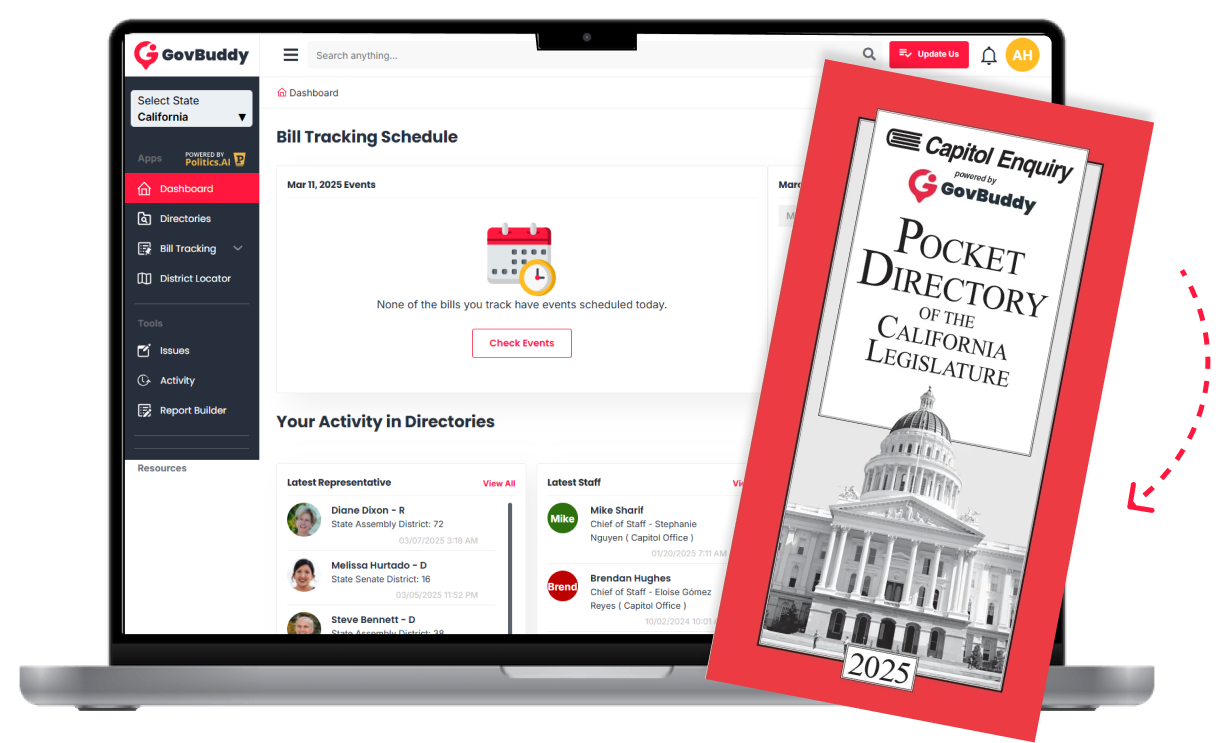
GovBuddy helps teams monitor state legislation in California, Ohio, and New York with context, timing, and procedural awareness, not just alerts.